
Francis Boma joined ETG and EFF in 2019 as Chief Agronomist for theAfDB-funded Cashew Infrastructure Development Project in Zambia.Since then, Francis, or Mr. Boma as he is known in EFF, grew from leading a single-country cashew project to providing technical leadership across EFF’s agroforestry programmes in multiple countries: Kenya, Tanzania, Mozambique and other parts of Zambia. Today, as Technical Advisor, he supports project design, develops technical guidance, builds staff capacity, and promotes climate-smart farming practices that strengthen smallholder livelihoods.

Working across Sub Saharan African countries has shown Mr. Boma that while farming systems differ, many challenges are shared. “Climate change, declining soil fertility, and slow adoption of sustainable agricultural practices affect farmers in every country we work in,” he says.
Speaking of these challenges, Mr Boma continues, “Previously, people weren’t aware of climate change. But now we see that rainfall is quite erratic. Kenya used to be bi-modal, meaning it had two rainy seasons. Today the short rains sometimes don’t occur. The October-November rains are not sufficient to grow staples like maize. We also see a lot of diseases, insects and pests, which are different from before.”
“These experiences have reinforced the importance of combining sound technical recommendations with effective extension, demonstration, and collaboration.”Crop selection at EFF is guided by a comprehensive assessment of agroecological suitability, climate resilience, farmer preferences, market opportunities, and project objectives. “This approach ensures that promoted crops are just right for the region, in addition to being economically viable, and capable of delivering lasting benefits to farming communities,” Boma explains.
He goes on, “Let me talk about cashew. In Kenya EFF is promoting polyclonal cashew seedlings grown from Tanzanian planting material. It is kind of a composite of many plants that were planted together in isolation. It is a product of the best of the best producing the best. It is disease tolerant, insect/pest tolerant, tolerant to drought, and has a high yield. We sourced this seed from Tanzania (TARI Mtwara) because Kenya doesn’t have such.”
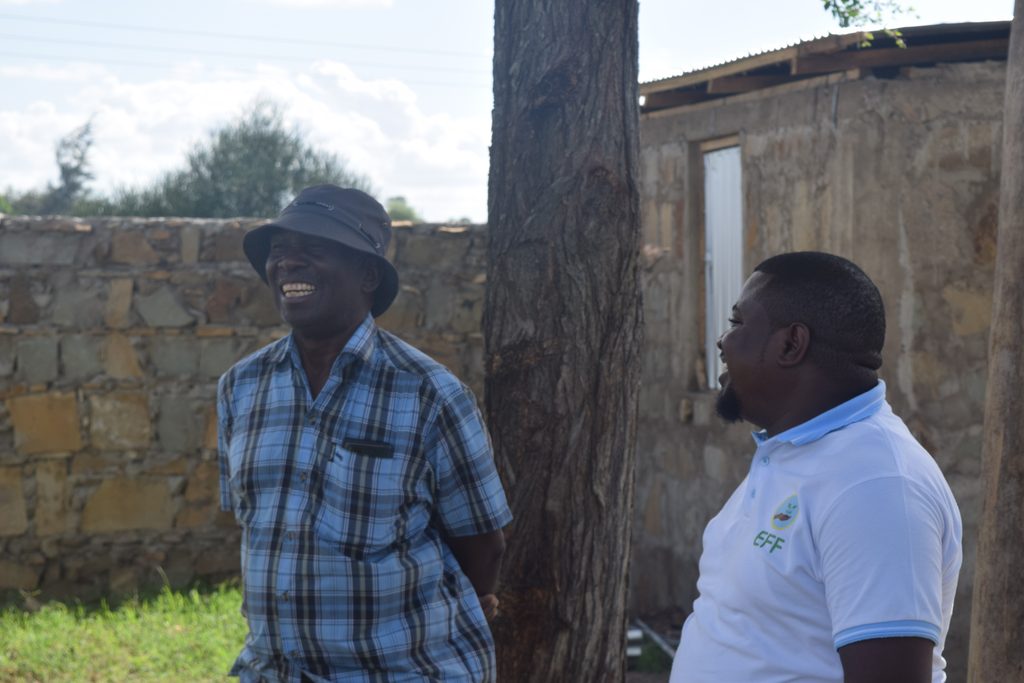
A significant part of Boma’s work involves training Field Extension Officers. “Training is an ongoing process focused on addressing identified knowledge gaps through practical, needs-based learning,” he says. By combining classroom instruction, field demonstrations, standardised training materials, and continuous technical support, EFF ensures that extension officers effectively transfer knowledge to farmers. Over the past year, he trained hundreds of FEOS in Kenya and Zambia, and in the past two years has assessed nearly 50 nurseries in our countries of operation. His work has indirectly benefited over 40,000 farmers through improved extension services in the ongoing programs EFF runs across all its countries.
For Mr. Boma, effective extension officers require both technical expertise and strong communication skills. “I emphasise participatory extension, problem-solving, and continuous learning through farmer feedback, field assessments, and refresher training,” he says.
Even when away from the field, Mr. Boma keeps his eyes on the ground. On a project WhatsApp group, a Field Extension Officer shared a photo of a farmer planting a seedling in a field showing sparse maize. Mr. Boma replied in Kiswahili, noting the signs of nutrient deficiency and the likelihood of a poor harvest. “We must continue encouraging farmers to enrich their fields,” he wrote. “The use of vermicompost and compost making should be promoted, alongside cover cropping and crop rotation.” This kind of real-time mentorship is characteristic of his approach.
Agronomic research underpins EFF’s project design. “Research, field observations, demonstration plots, and farmer feedback are continuously used like a feedback loop. The info from the ground is used to refine seedling selection, management practices, and training programmes,” Mr. Boma explains. This feedback loop ensures interventions remain practical and responsive to farmers’ needs. He has also prepared training manuals, assisted in developing standard operating procedures, and managed over 150 farmer queries this year, advising on good agricultural practices for cashew and intercrops.
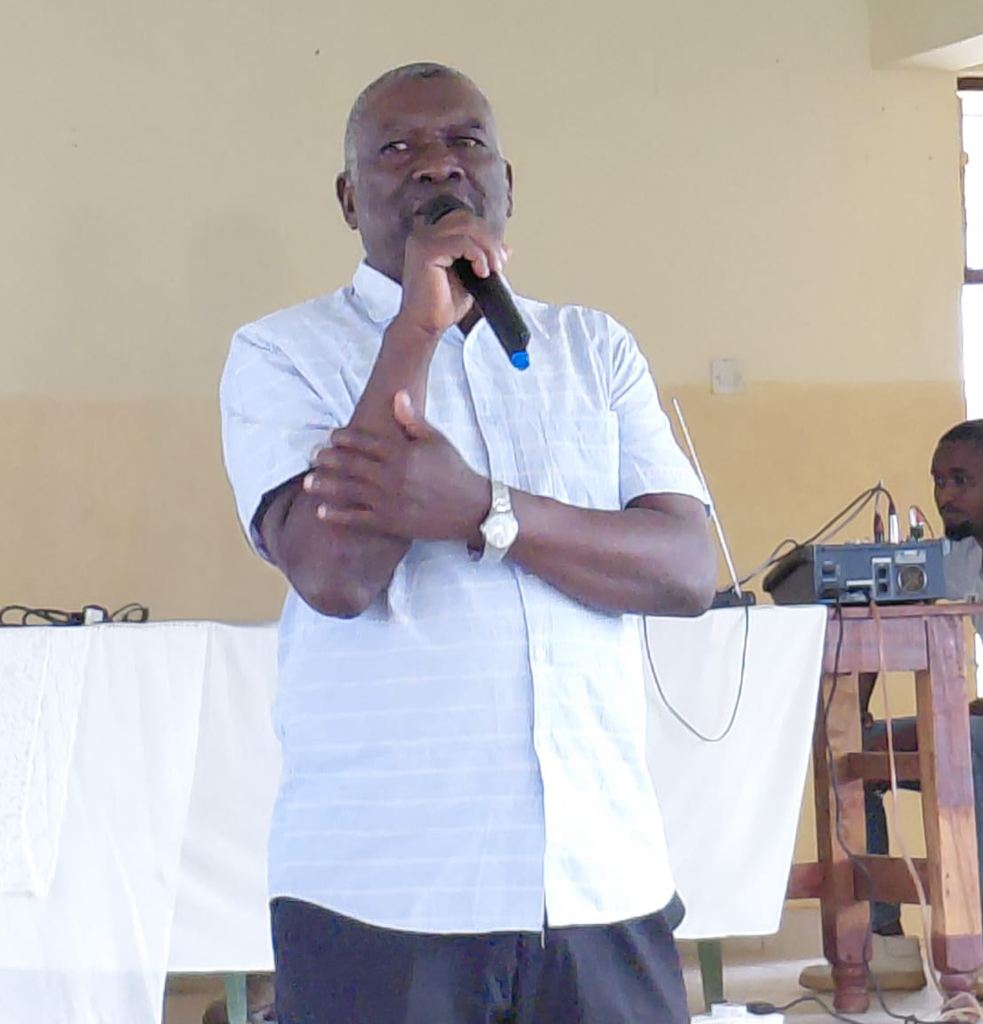
Looking ahead, Mr. Boma believes EFF’s priority should be strengthening technical capacity through continuous learning, expanding demonstration-based extension, improving knowledge management, and making greater use of monitoring data to guide decision-making. “I am focused on advancing regenerative agriculture. It’sa farming approach that restores soil health, increases biodiversity and captures carbon. With EFF, my aim is strengthening agroforestry systems, and building the capacity of extension officers and farmers,” he says.
Reflecting on his own growth, Boma adds, “I have had the opportunity to contribute to a range of activities, including field implementation, technical assessments, and reporting. These experiences strengthened my understanding of sustainable agriculture, agroforestry, and environmental management. On top of technical knowledge, I also grew in confidence, adaptability, and in collaborating with colleagues and farming communities.”
For EFF, Boma’s work represents more than technical advice. It is the foundation upon which farmers build better harvests, healthier soils, and more secure futures.